Art, fashion and streetwear: expressing your creativity every day
, by Gary KAGO , 15 min reading time
, by Gary KAGO , 15 min reading time
Discover the role of artwork in fashion and streetwear to express your creativity in style every day. Read our article now!
TL;DR:
- Art influences fashion through motifs and forms derived from 20th-century artistic movements.
- Streetwear democratizes urban art through collaborations that are accessible and visible on a daily basis.
- The relationship between art and fashion raises issues of authenticity and commercial massification.
Art has long been perceived as the domain of galleries and museums. Fashion, on the other hand, belongs to the street. Yet, these two worlds have been converging for decades to create something powerful: clothes that tell a story, that express a worldview. For today's young creatives, wearing a t-shirt emblazoned with the colors of an art movement or a hoodie designed by a street artist is not simply a sartorial choice. It's a statement. This article explores how art concretely influences fashion and streetwear, and how everyone can use these codes to assert a unique personality.
| Point | Details |
|---|---|
| Art inspires every fashion | The motifs derived from Cubism, Impressionism or Pop Art transform clothing into true works of art. |
| Streetwear democratizes art | Streetwear incorporates urban art to allow everyone to wear artistic expression. |
| Collaborations: Opportunity and Investment | Fashion-art collaborations provide access to unique pieces and represent a growing value in the market. |
| Authenticity above all | Staying true to one's artistic inspirations helps to avoid creative dilution and to reveal one's personality. |
The history of fashion is deeply intertwined with that of art. The major artistic movements of the 20th century not only redefined paintings and sculptures, but also transformed the way clothes are designed, colored, and worn.
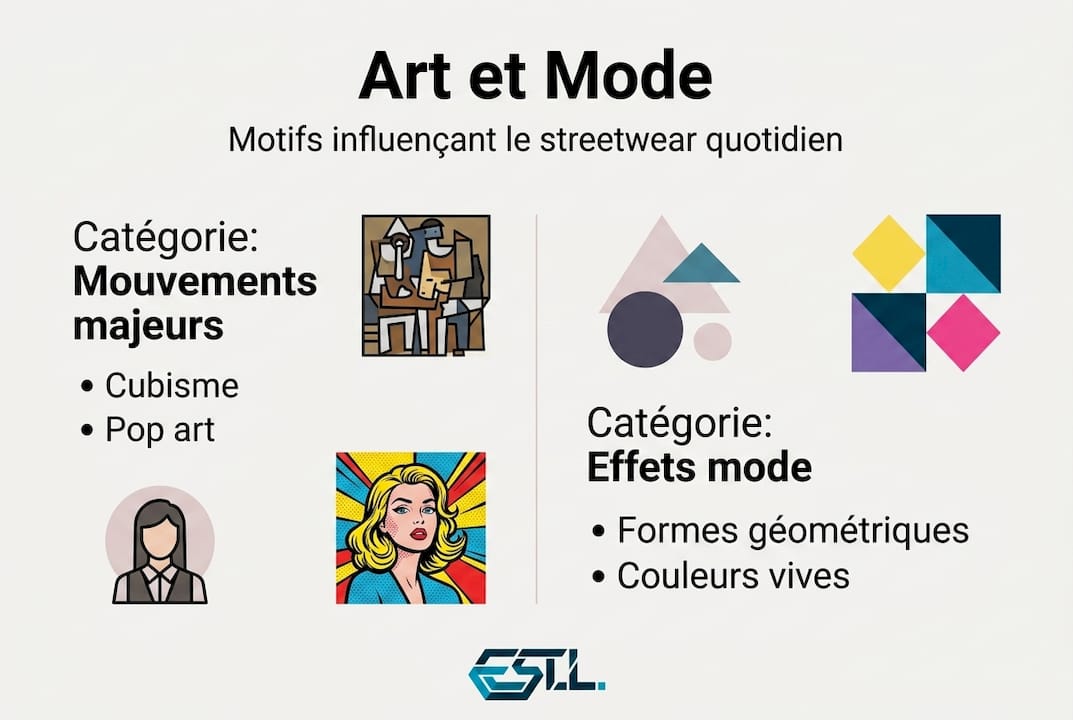
THE motifs derived from art like Cubism, Impressionism or Pop Art transform clothing into moving canvases, allowing fashion designers to draw directly from these movements to design pieces with a strong visual impact.
Let's take the cubism As a concrete example, consider the movement initiated by Pablo Picasso and Georges Braque in the early 20th century. This movement breaks down forms into superimposed geometric fragments. This aesthetic directly inspired designers like Yves Saint Laurent, who, as early as the 1960s, incorporated structured blocks of color into his silhouettes. Today, we find these same angular shapes on sweatshirts and jackets, often paired with striking color contrasts.
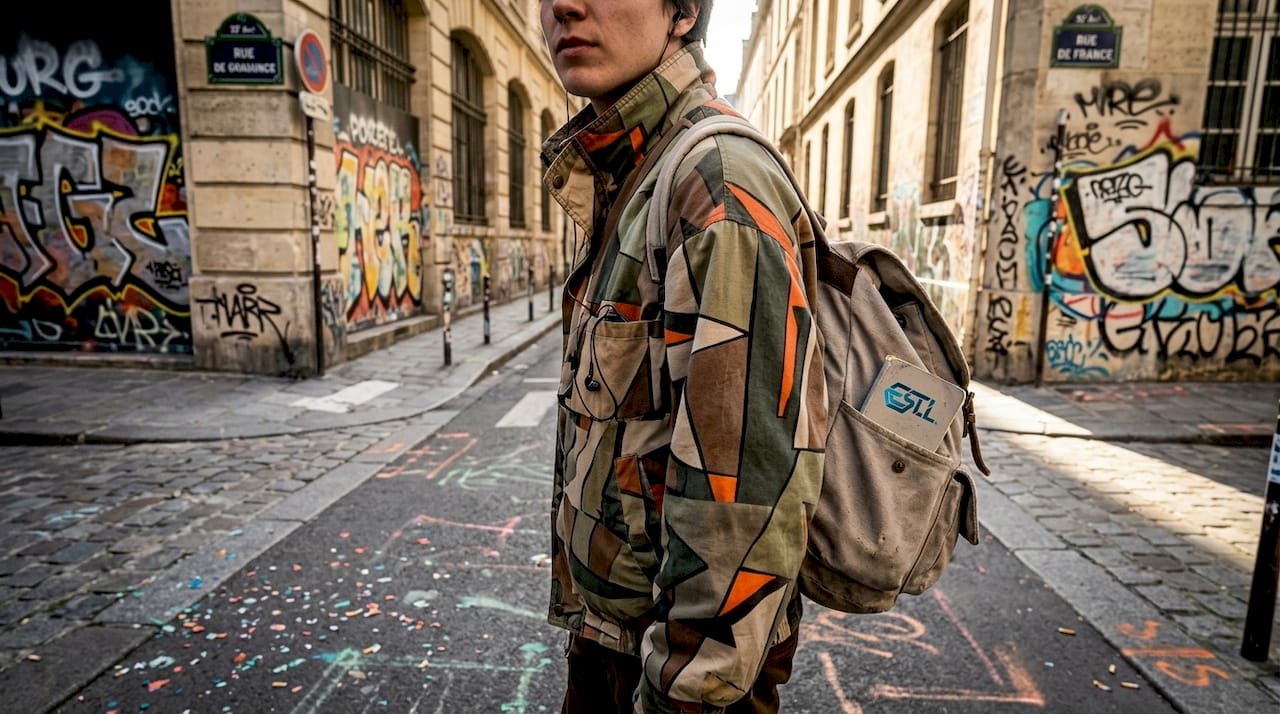
THE pop artHe, however, changed everything in the relationship between art and consumption. Andy Warhol and Roy Lichtenstein introduced vibrant colors, dot patterns, and graphic slogans. These elements have become essential visual codes in contemporary fashion. Flat prints, repetitive visuals, and bold typography come directly from this legacy. artistic styles explained on the blog ofestlshop.fr provide a clear view of these influences for anyone who wants to better understand these connections.
L'ImpressionismWith its soft palettes and touches of light, it influences high-end ready-to-wear collections. Color gradients, floral prints, and watercolor blur effects are all sartorial translations of this movement, which originated in 19th-century France.
Here are some key characteristics that artistic motifs bring to fashion:
| artistic movement | Visual characteristics | Application mode |
|---|---|---|
| Cubism | Geometric shapes, sharp angles | Patchwork, structured prints |
| Pop art | Bright colors, repetitive graphics | Graphic T-shirts, iconic prints |
| Impressionism | Gradients, blur, light | Watercolor prints, pastel shades |
| Street art | Graffiti, typography, contrasts | Streetwear, limited editions |
Pro tip: To choose an art-inspired motif that works with your style, start by identifying the art movement that resonates with you most emotionally. Then, look for pieces that incorporate those elements without overwhelming them. A single statement piece is often enough to create a cohesive look. The collections wearable art are a good starting point for exploring these universes.
Classical art was long the preserve of galleries and institutions. Streetwear, however, changed everything. It made art accessible, visible, and wearable. Every day, on every street, people wear works of art without necessarily realizing it.
Urban art, particularly graffiti and street art, direct influence The designs on t-shirts, hoodies, and sneakers, with iconic collaborations like Supreme x Basquiat, KENZO x FUTURA 2000, or Keith Haring with various brands, marked a turning point: they legitimized street art as a serious creative source for fashion.
Supreme is perhaps the best-known example. The New York brand collaborated with Jean-Michel Basquiat, the African-American artist whose works now fetch millions of dollars at auction. By incorporating these images onto t-shirts and caps sold at affordable prices, Supreme made Basquiat visible to an entire generation that might never have otherwise set foot in a museum.
These collaborations have several beneficial effects:
There creative fashion culture Today, this trend also takes place on social media, where independent creators share their looks while citing their artistic references. TikTok, Instagram, and Pinterest have become open-air galleries for art-inspired fashion.
| Collaboration | Artiste | Marque | Impact |
|---|---|---|---|
| Supreme x Basquiat | Jean-Michel Basquiat | Supreme | Democratization of African American art |
| KENZO x FUTURA 2000 | FUTURA 2000 | KENZO | A fusion of graffiti and accessible luxury |
| Uniqlo x Keith Haring | Keith Haring | Uniqlo | Art for all, public prize |
| Off-White x diverses galeries | Virgil Abloh | Off-White | High-end art/fashion blurring |
THE streetwear personality guide helps navigate this rich universe to find the style that truly matches each personality.
Pro tip: When you choose a garment from an artist-brand collaboration, learn about the artist. Understanding their work and message enhances the authenticity of your look. You'll then be wearing something that truly represents you, not just an aesthetically pleasing design. Discover how. express a unique personality in fashion to take this approach further.
Fashion draws inspiration from art. But this relationship is not without its tensions. In the world of contemporary art, fashion is sometimes viewed with suspicion. It can be perceived as too superficial, too fast-paced, too commercial.
“In contemporary art, fashion can be seen as 'too flashy' or inauthentic, creating a 'art world gaze' where appearance must align with the artistic work, with a real risk of art being commercialized.
This critical perspective deserves to be taken seriously. When a major brand reproduces an artist's work on thousands of items to generate profit, art sometimes loses its original essence. Rarity, intention, context: all of this is lost in mass production.
Here are the main tensions between art and commercial fashion:
To remain true to a genuine artistic approach, one must choose with discernment. This means taking an interest in the artists whose works inspire the clothing, understanding the context of each collaboration, and favoring designers who share one's values. The website unique art and fashion offers resources to navigate this complexity with a critical eye.
The question isn't about choosing between "pure" art and fashion. It's about finding pieces that carry genuine intention. An independent artist's print on a t-shirt can have far more artistic value than a luxury logo printed on an overpriced garment.
Understanding the links between art and fashion is good. Applying them to your own style is better. Here's how to intentionally and coherently integrate art-inspired pieces into your wardrobe.
The first step is to identify your personal artistic influences. Are you drawn to the geometric shapes of Cubism? The vibrant colors of Pop Art? The spontaneity of graffiti? This self-reflection naturally leads you to patterns and pieces that resonate with you.
Here are some concrete tips for finding art-inspired clothing:
From an investment perspective, art-fashion collaborations offer increasing value. NFT fashion collab market The market reached $1.74 billion in 2025 and is projected to reach $2.23 billion in 2026, representing an annual growth rate of 28.1%. These figures confirm that wearable art is not a passing fad. It is a rapidly expanding market.
Key figure: The market for fashion-art collaboration NFTs is growing by 28.1% per year, increasing from $1.74 billion in 2025 to $2.23 billion in 2026.
To choose the right piece, you also need to consider the overall harmony of the look. A very graphic garment often calls for simpler pieces around it. The guide for select the perfect art for clothing offers specific advice on this subject. artistic accessories are also an excellent entry point for integrating art into one's style without changing everything at once.
For those who wish to go further, to become clothing designer Being inspired by art is an accessible path, with the right tools and references.
The line between high art and accessible fashion has shrunk considerably in recent years. This is good news for those seeking to express themselves without financial or cultural barriers. But this democratization also has its limits.
The main risk is artistic dilution through the mass market: when everyone wears the same "artistic" designs bought in supermarkets, originality disappears. Democratization through streetwear is a fantastic opportunity, provided it's accompanied by a genuine critical perspective on what we wear and why.
Wearing art is more than just an aesthetic choice. It's a statement of intent. It requires research, careful selection, and supporting artists whose work truly resonates with you. The most powerful art-inspired styles are those that reflect a sincere personal approach, not a fleeting trend.
In 2026, the question is no longer whether art belongs to fashion. It is how each individual constructs, with coherence and authenticity, their own visual language through what they wear every day.
To put everything you've just read into practice, a selection of parts awaits you on estlshop.frThe platform offers collections directly inspired by the artistic work of Gary Kago, an artist whose works blend color, form and personal expression.

The collections of women's clothing and men's clothing incorporate graphic motifs drawn from a genuine artistic universe. For lovers of original works, the works in dry pastel They offer an immersion into unique landscapes and pictorial compositions. Each piece is an invitation to wear art with intention and to build a style that truly reflects you.
Analyze the patterns, colors, and shapes that resonate with your personality, as artistic movements like Cubism, Impressionism, and Pop Art offer very different visual languages. Favor artistic collaborations or unique pieces over generic prints.
Streetwear has profoundly democratized art in fashion through urban motifs and accessible collaborations, as evidenced by the influence of street art on everyday t-shirts, hoodies, and sneakers. Today, there are artistic pieces for every budget.
Cubism, Impressionism, and Pop Art are particularly prominent in contemporary designs, as these movements offer distinctive patterns and colors that can be directly transposed onto clothing. Street art and graffiti also dominate the world of streetwear.
Yes, the market for art-fashion NFT collaborations is projected to grow from $1.74 billion in 2025 to $2.23 billion in 2026, representing an annual growth rate of 28.1%. Limited-edition pieces resulting from genuine art collaborations often appreciate in value over time.


