
Clothing personalization: a mode of expression and creativity
, by Gary KAGO , 14 min reading time
, by Gary KAGO , 14 min reading time
Discover the power of clothing customization to unleash your creativity and express your unique style. Transform your clothes!
TL;DR:
- Personalizing one's clothing is an act of artistic expression and self-affirmation, boosting self-confidence. It serves several purposes: expressing creativity, asserting values, strengthening a sense of belonging, and fostering social connections. Various affordable techniques exist for refreshing one's style while avoiding pitfalls and inconsistencies.
Fashion isn't simply about trends. It shapes how we see ourselves and how the world sees us. For creative minds, personalizing their clothes goes far beyond an aesthetic gesture: it's an act of self-affirmation. young people under 30 are twice as demanding of personalization as previous generations, and the concept ofclothed cognition This confirms that wearing what you've chosen or created truly boosts self-confidence. This guide explores how personalized clothing becomes a powerful tool for artistic expression and identity.
| Point | Details |
|---|---|
| To express oneself freely | Clothing personalization allows you to express your creativity and authenticity at any age. |
| Diversity of methods | Many techniques exist, and each can be adapted to your desires and constraints. |
| Beware of the constraints | The specific regulatory requirements and the cost must be anticipated to avoid unpleasant surprises. |
| Inspiration accessible | Even without experience, you can try customization using guides, tips and accessories. |
In a world saturated with images and standardized trends, personal clothing remains one of the few spaces of total freedom. Fast fashion offers the same cuts, the same colors, the same logos everywhere. As a result, you see your own t-shirt worn by one in ten strangers on the street. This feeling of erasure is pushing a growing number of young creatives to look for something different.
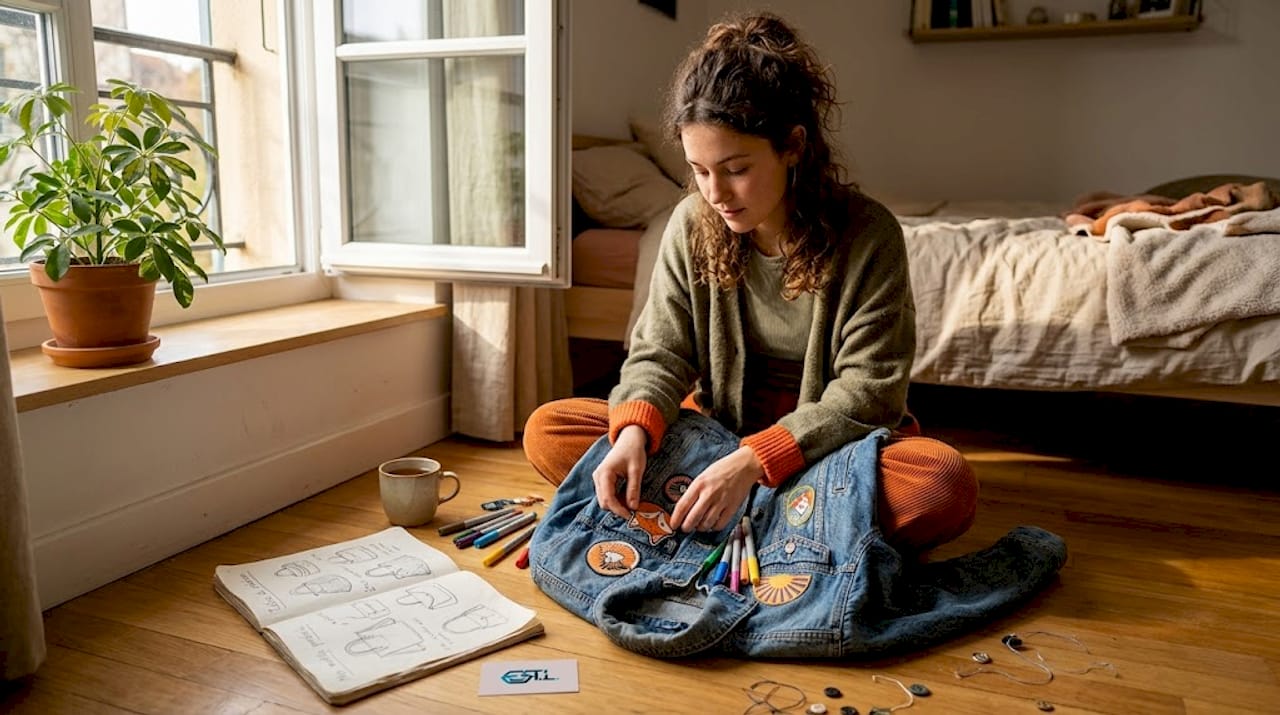
The quest for identity is at the heart of this approach. Personalizing a garment means asking a simple question: who am I, and how do I show it? This question is not trivial. It touches on confidence, belonging, and how we want to be seen. For artists, illustrators, graphic design enthusiasts, or simply those who appreciate originality, express one's personality Through clothing, it is a natural extension of their creativity.
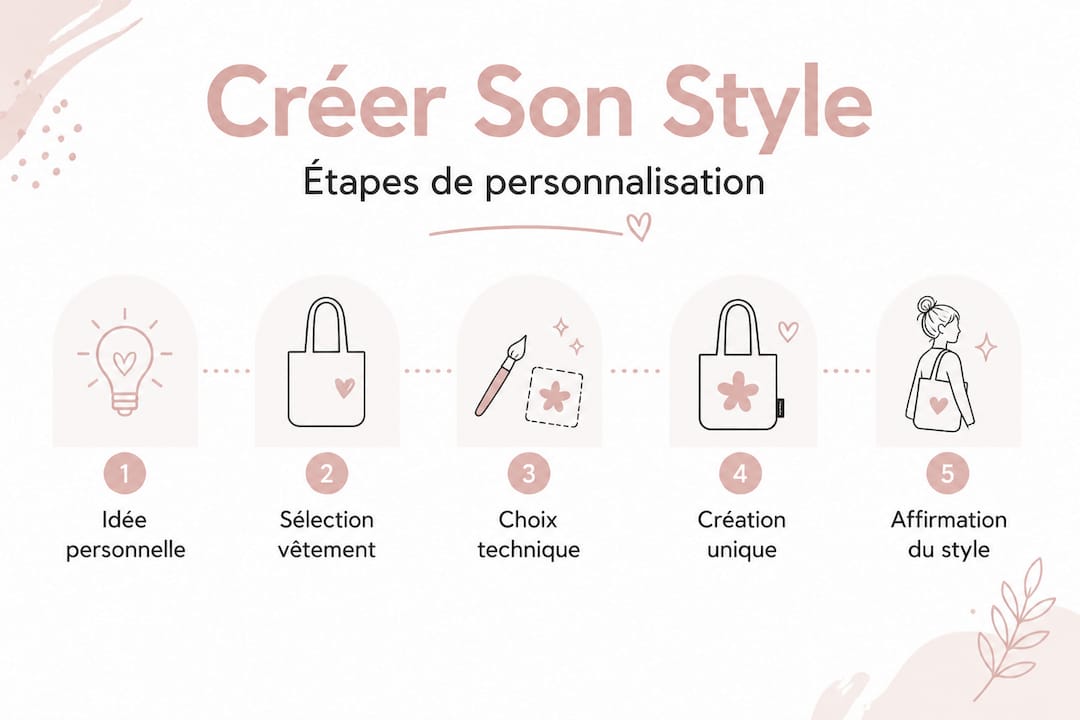
The effect clothed cognitionResearch documented by behavioral psychology scientists shows that clothing directly influences cognitive processes. Wearing something you've designed or carefully selected amplifies a sense of authenticity. This isn't vanity; it's about consistency between your inner and outer self.
Personalization also plays a different role depending on the context. For a creative individual, it liberates artistic expression. In a professional setting, it can strengthen the identity of a team or brand, while also risking creating tension with expected norms. choice of original clothing often reveal strong personality traits: according to psychological analysis, people who always dress distinctively tend to have a deeply rooted identity and a great capacity for self-assertion.
Pro tip: Dare to mix a striking artistic piece with simple basics. This contrast creates an instantly recognizable visual signature, without going overboard.
Having grasped the overall importance of personalization, let us examine the concrete functions it fulfills for each individual.
Personalization addresses very different needs depending on the individual. It doesn't have a single purpose; it has several, often simultaneously. Here are the five main functions:
To express one's creativity and uniqueness. This is the most immediate function. Adding a pattern, a color, or a message to a garment makes it unique. It transforms a consumer item into a wearable work of art.
To assert a sense of belonging. Some artist collectives, music groups, or creative communities use shared dress codes. Personalization allows individuals to signal their belonging to this world without shouting it from the rooftops.
To advocate for a cause or a value. A garment can carry a political, environmental, or social message. It then becomes a visible space for expression, worn every day.
Promote self-confidence. Wearing what you've chosen or created generates a sense of inner coherence. Data on personalization shows that those under 30 experience a measurable positive impact on their everyday authenticity when they wear personalized pieces.
Create social connections. An original garment attracts attention and sparks conversations. It acts as a natural filter: it attracts people who share the same sensibilities.
| Function | Main benefit | Concrete example |
|---|---|---|
| Creative expression | Visual singularity | Self-illustrated T-shirt |
| Membership | Group cohesion | Patch by an artistic collective |
| Engagement | Visibility of a cause | Message printed on sweatshirt |
| Trust | Enhanced authenticity | A piece chosen with intention |
| Social connection | Affinities revealed | A style that appeals to creative peers |
Choose pieces that reflect a unique personality is a process that evolves over time. It's not about deciding everything at once, but about gradually building a wardrobe that reflects who you are. For those still unsure about the artistic approach to take, there are guides on how to choose a fashion art can help clarify priorities.
“The way we dress is a silent language. It speaks before we even open our mouths.”
You now know why and how personalization shapes your identity. Let's explore how to implement it in practice.
Today, there are many techniques for personalizing clothing. Some require no special equipment. Others require more preparation. Here are the main ones:
| Technical | Accessibility | Sustainability | Artistic freedom | Cost |
|---|---|---|---|---|
| Embroidery | Mean | Very high | Limited | Medium to high |
| Digital printing | High | High | Very high | Medium |
| Patch | Very high | Mean | Mean | Weak |
| Textile paint | High | Mean | Maximum | Weak |
| Upcycling | High | Variable | High | Very low |
However, be aware of special cases. Embroidery on flame-retardant clothing requires... special threads To avoid compromising the safety properties of the textile, reflective markings on high-visibility clothing must comply with ANSI or ISO standards. DTF (Dry Textile Fluorescent) technology, applied to technical textiles like Gore-Tex or breathable fabrics, can block airflow and reduce garment performance. Understanding these nuances is crucial for thoughtful customization.
To further organize your creative process, it is helpful tooptimize the personalization workflow to save time and ensure consistency. And if you want to extend your approach beyond clothing, personalize your accessories is an excellent way to complement a strong style.
Pro tip: Diversify your customization options. A bag, a cap, or even a pair of shoes customized can become the signature piece of an otherwise understated outfit. The balance between subtle and bold creates an interesting visual tension.
Customizable, but also watch out for obstacles! Here's how to move forward with confidence.
Personalization is an exciting approach, but it involves real areas of friction. Ignoring them often leads to disappointing results or premature abandonment.
The unanticipated additional cost. Some techniques are more expensive than expected, especially if you use service providers. Professional embroidery on a series of items can quickly exceed a student's budget. It's best to start with low-cost techniques (patches, painting) before investing in complex processes. Personalization liberates expression, but it must remain within one's financial means.
The risk of marginalization. Wearing a very distinctive style in an inappropriate social setting can create a feeling of isolation. It's not about abandoning your style, but about understanding the contexts in which it's best expressed. Satisfaction with creativity is more easily embraced in spaces that value it.
Artistic incoherence. Accumulating personalized pieces without a unifying theme can result in a visually cluttered look. Good personalization follows a logical approach: recurring colors, a consistent graphic style, or a clear intention behind each choice. This doesn't mean uniformity, but building something together.
The tension between belonging and individuality. Sometimes you want to be like your group while also standing out within that group. It's a healthy tension. It pushes you to refine your style rather than copy it.to inspire creative styles Using existing resources to better build one's own is a proven method.
“Originality does not arise from a void. It arises from the way we look at what already exists, and how we transform it.”
These four points are not insurmountable obstacles. They are invitations to delve deeper into the process before taking action. The most successful personalization is that which has been considered, even briefly, before being implemented.
There's a persistent misconception: that personalization is a rigid process. You find "your style," you apply it, and that's it. This is false. And it's precisely this misconception that holds many young creatives back.
Personalization is a continuous experiment. It evolves with the seasons of life, with encounters, with artistic discoveries. A style that seemed perfect at 20 may seem restrictive at 24. This isn't a mistake: it's a sign of evolution.
What real-life experience teaches us is that personal style can't be decreed. It's invented every day, little by little. A patch added here, a color tested there, a piece found in a thrift store and transformed. Clothing then becomes a visible diary, a safe space for experimentation.
The other truth that emerges with time is that originality isn't a permanent state. It's a direction. You don't "become" original once and for all. You choose, again and again, not to follow the most obvious path. It's a daily practice, not an acquired status.
Expressing one's creativity on a daily basis Through clothing, we accept that some attempts won't work. And that's precisely what makes the process vibrant. The best style is the one that retains an element of uncertainty, a zone of exploration.
Ready to bring your style to life? Take action with original and artistic pieces.
At the house of estlshop.frEach piece is designed for creative minds who want their wardrobe to reflect their artistic sensibility. The collections are directly inspired by the graphic work of Gary Kago, blending color, shape, and free expression.

Whether you're looking for women's custom clothing To express your style every day, choose pieces from Men's personalized fashion with strong visuals, or personalized women's accessories To complete an outfit, the boutique offers a cohesive and artistic selection. Each item is an invitation to wear art differently, without compromising on originality.
Iron-on patches, custom textile painting and accessories are the most accessible methods for beginners, as they require neither professional equipment nor advanced technical training.
Yes, studies show that those under 30 are twice as likely to demand personalization, and the concept ofclothed cognition confirms that wearing personalized pieces reinforces authenticity and confidence on a daily basis.
Some textiles require specific standards: for example, embroidery on flame-retardant clothing requires suitable threads to preserve safety properties, and DTF can compromise the breathability of technical textiles.
Some methods are very affordable, such as fabric painting or patches, while others are more expensive. Depending on the desired level of personalization, there are creative alternatives for every budget, provided you choose the right technique based on your resources and objectives.


