
Fashion and art: expressing your unique personality in 2026
, by Gary KAGO , 10 min reading time
, by Gary KAGO , 10 min reading time
Discover how fashion and art can help you express your unique personality in 2026: creative methods, psychological challenges and artistic inspirations.
TL;DR:
- Fashion is a personal language that reveals values, emotions, and individual identity.
- Art inspires style by remixing trends and creating unique visual associations.
- Developing one's style requires experimentation, sincerity, and the use of creative resources to assert it.
In 2026, 42% of consumers Many people favor an aesthetic tailored to their personal style to express their identity. Yet, many still believe that following trends is enough to express who they truly are. This guide explores another path: one where clothing, accessories, and artwork become a unique language. You'll discover why fashion today is much more than just about appearance, how art can transform your wardrobe, and what concrete methods allow you to build a style that reflects your deepest personality.
| Point | Details |
|---|---|
| Fashion is a language | Your clothing style expresses your individuality and influences how others perceive you. |
| Art and trends form a duo | Mixing artistic influences and trends allows for a truly personal expression. |
| Authenticity comes before conformity | Asserting one's style requires overcoming social pressure to create a universe that is consistent with oneself. |
| Concrete tools exist | Mood boards, customization, or printed artwork make it easier to build a unique style. |
Fashion hasn't always been synonymous with individuality. For centuries, clothing primarily signaled social rank or function. Today, it speaks volumes about who you are, what you feel, and what you believe in.
This trend is particularly visible among younger generations. For teenagersFashion is a space for the search for identity and belonging, directly influencing self-esteem. Wearing a certain type of clothing sends a signal to the world. It says: this is who I am, this is where I belong.
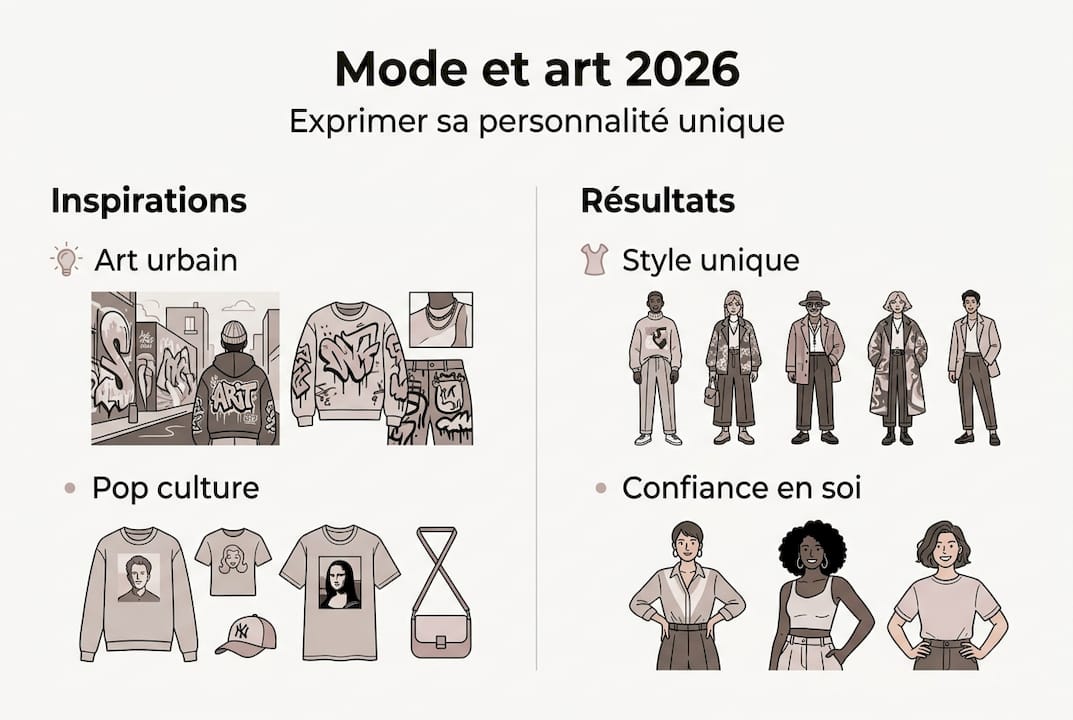
Generational trends confirm this pattern. Gen Z and Millennials are increasingly rejecting the uniform codes imposed by major brands. They seek authenticity, uniqueness, and meaning. personality and clothes They are no longer two separate universes: they form a coherent whole.
Here's what fashion concretely expresses for a young adult today:
"Fashion is a silent language. Each piece tells a story that words cannot always express."
By 2026, 42% of consumers will favor a personalized aesthetic rather than one dictated by trends. This figure illustrates a profound shift: fashion is no longer passive. It is active, intentional, and engaged.
L'originality of dress It thus becomes an act of self-confidence. Distinguishing oneself visually means accepting being seen. It's a form of quiet courage that many young adults learn to cultivate, often using art as a creative compass.
Art and fashion have always had a close relationship. But today, this relationship is accessible to everyone. You don't need to be a designer or a collector to incorporate an artistic dimension into your style.
25% of Gen Z and Millennials remix trends to create their own unique style. This remixing is precisely what makes a look memorable. It's not about copying, but about combining.
Here's how different artistic movements can inspire your wardrobe:
| Artistic style | Influence on fashion | Concrete example |
|---|---|---|
| Street art | Bold graphics, vibrant colors | T-shirt with urban print |
| Minimalism | Clean lines, neutral palette | Structured monochrome outfit |
| Abstract art | Free forms, unexpected textures | Geometric pattern sweatshirt |
| Figurative art | Portraits, narrative scenes | Jacket with artist's illustration |
THE trending illustrations They allow you to create strong visual associations without excessive effort. A contemporary artist's print on a basic t-shirt transforms an ordinary outfit into a personal statement.
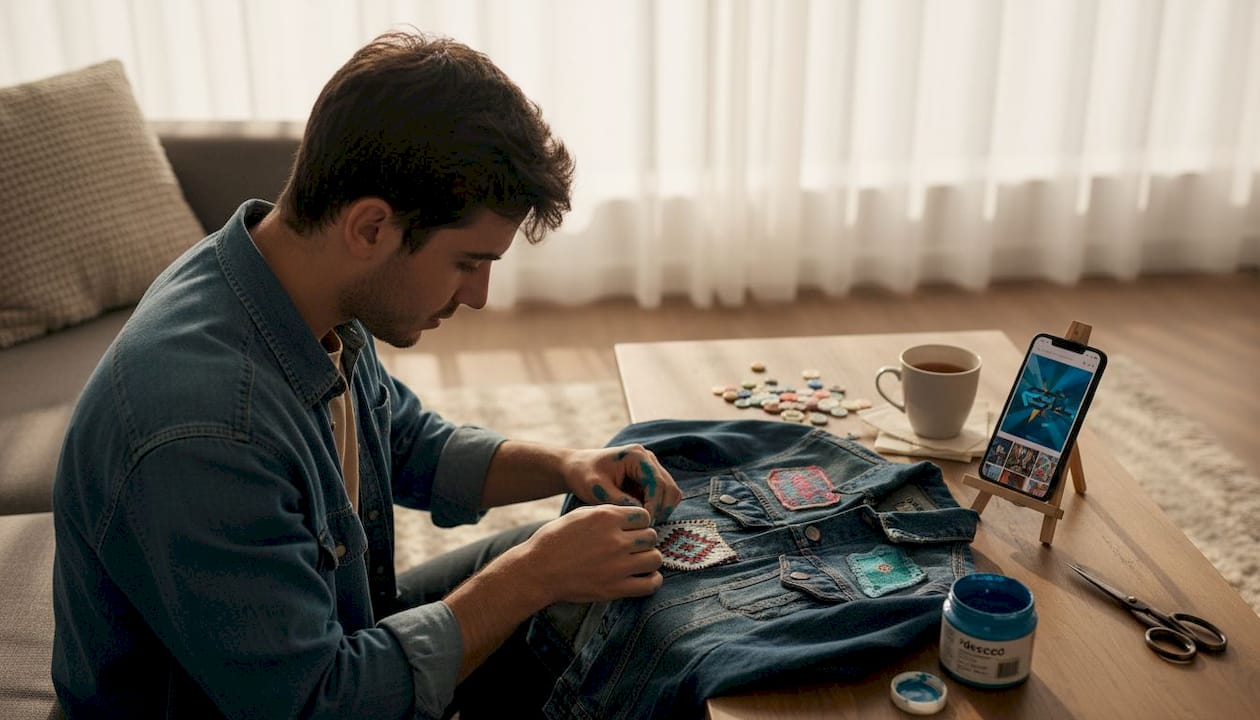
The mix of vintage and modern works particularly well. Combining an antique piece with a recent graphic accessory creates an interesting visual tension. It's this tension that makes a style vibrant and distinctive.
For harmonizing color and art When it comes to your outfits, a few simple principles are enough:
Pro tip: Create a physical or digital mood board. Gather images of artwork, outfits, materials, and colors that appeal to you. This board becomes your style compass. It reveals your deepest preferences better than any style quiz.
Choosing clothes seems trivial. In reality, it's often a complex emotional exercise. Social pressure, implicit norms, and the fear of judgment weigh heavily in the balance.
Social pressure can cause anxiety and feelings of exclusion when one deviates from dominant dress norms. This risk is real, especially in school or professional environments where conformity is valued.
“Dressing differently means accepting that some people won’t understand. But it also means opening the door to those who are looking for exactly what you represent.”
Fast fashion adds another layer of complexity. It offers low-priced trends, but at the cost of widespread uniformity and a significant environmental impact. Many young people feel genuine guilt about these choices.
Here are the main psychological issues related to clothing style:
| Enjeu | Manifestation | Solution path |
|---|---|---|
| Fear of judgment | Avoid original pieces | Experimenting in supportive environments |
| Conformity | Neutral style, without personality | Add a distinctive accessory |
| Ecological Guilt | Repeated fast fashion purchases | Opt for vintage or slow fashion |
| Social comparison | Imitating influencers | Returning to one's own artistic references |
Gen Z is gradually distancing itself from these norms. It values authenticity over conformity. artistic styles become tools of soft resistance against standardization.
To manage this pressure on a daily basis, here are three helpful steps:
Moving from intention to action is often where the process gets stuck. Building a personal style requires a method, patience, and a good dose of curiosity.
Interest in fashion and gender Key predictors of style include six factors that explain clothing preferences, according to a study conducted in the UK and the US. These factors include personality, cultural values, and social environment. Understanding these influences allows for greater self-awareness and more intentional choices.
Here are the steps to build a style that reflects your personality:
Customization is a powerful tool. Painting, embroidering, or printing on an existing piece gives it a unique dimension. Knowing Select the perfect art for your clothes is a skill that can be learned and that transforms your relationship with your wardrobe.
For those who wish to go further, optimize your personalization experience Using a structured method saves time and ensures consistency.
Some creative resources to incorporate into your routine:
Pro tip: Keep an inspiration journal. Jot down colors, materials, images, and words that resonate with you. Review it before each purchase. This journal becomes a natural filter against impulsive buying and a guide toward an increasingly cohesive style.
Style is often discussed as a matter of taste. We believe it's much more than that. Dressing with intention is an exercise of concrete freedom in a world that pushes conformity.
Every clothing choice is a micro-political decision. Wearing a piece by an independent artist rather than a logo from a major brand means choosing who we give visibility to. It means supporting a creative economy, a different worldview.
Authenticity matters far more than aesthetic conformity. An imperfect but sincere style communicates infinitely more than a perfectly coordinated but soulless outfit. Young adults who dare become designers of their own clothes they often discover an unexpected self-confidence.
Fashion can also foster dialogue between generations and cultures. A garment inspired by a distant artistic tradition or a bygone era sparks conversations. It invites curiosity and exchange. It is this social and cultural dimension that makes fashion a truly committed act, and not merely a superficial matter.
Want to go further? Discover concrete resources to reveal and enrich your creative world.
EAST.L Shop offers a selection designed for those who see fashion as an extension of their creativity. You will find there women's accessories Original designs, created to complement a personal style without overwhelming it. artistic printed works The boutique's collection, inspired by Gary Kago's designs, allows you to integrate art directly into your wardrobe or living space. Each piece is an invitation to express something true, unique, and personal.
Prioritize experimentation with small pieces and focus on your personal feelings. Social pressure can cause anxiety and exclusion if you deviate from the norms, but a gradual introduction of original pieces reduces this risk.
The remixing of aesthetics, personalization, and the integration of artwork are booming. By 2026, 42% favor personal curation and 25% actively remix trends for an authentic style.
Interest in fashion, gender and six key factors defined by the ECPF-2 study largely guide clothing preferences, including personality and cultural environment.
Combine trendy pieces with unique accessories or artistic prints for a personal and harmonious result. 25% of Gen Z are already remixing trends to create a style that truly belongs to them.


